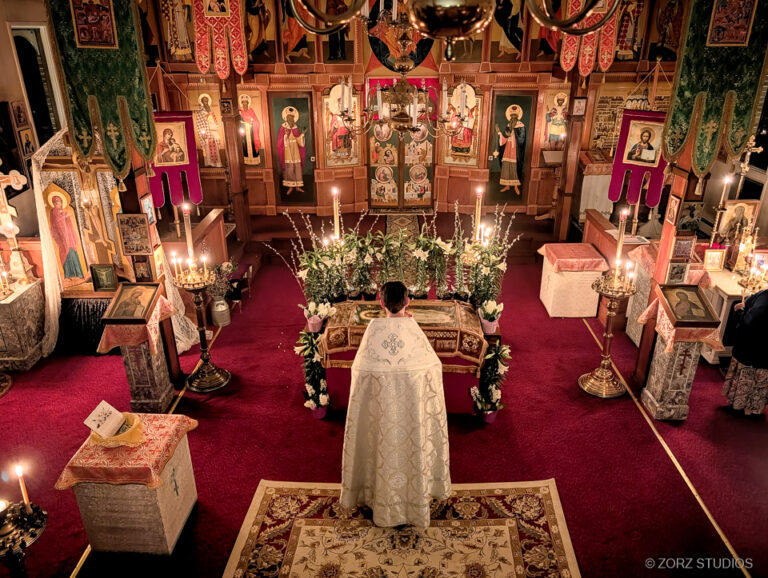
The Orthodox people have a deep love for monasteries. Currently, there are about 500 monasteries in the Russian Orthodox Church. In addition to resident monks and nuns, monasteries welcome laborers and pilgrims who come to strengthen their faith, grow in piety, and contribute to the restoration and upkeep of the monastic community.
A monastery has stricter discipline than a parish. Although newcomers’ mistakes are generally forgiven with love, it is best to visit a monastery with some knowledge of its rules.
Spiritual and Administrative Structure of a Monastery
A monastery is headed by a spiritual archimandrite—either the ruling bishop or, in the case of a stavropegial monastery, the Patriarch himself.
However, the monastery is directly managed by the abbot (archimandrite, hegumen, or hieromonk). In ancient times, this role was called “staretz” or “builder.” A women’s monastery is headed by an abbess (igumenia).
To ensure a well-ordered monastic life, where monasticism is a highly refined spiritual path polished by centuries of tradition, every member of the monastery has a specific obedience.
The deputy abbot (blagochinny) is responsible for all services and canonical order. He typically assigns accommodations for visiting pilgrims.
The spiritual father (dukhovnik) plays a vital role, providing spiritual guidance. This is not necessarily an elder in age but rather someone experienced in spiritual matters.
Other key monastery roles include:
- Treasurer (kaznachey) – manages donations with the abbot’s blessing.
- Sacristan (riznichiy) – oversees the beauty of the church, vestments, sacred items, and service books.
- Econom (ekonom) – manages monastery operations and assigns laborers their tasks.
- Cellarer (kelar) – responsible for food storage and preparation.
- Guestmaster (gostinnichiy) – handles accommodations for monastery visitors.
In women’s monasteries, these roles are fulfilled by the nuns, except for the spiritual father, who is appointed by the bishop and is usually an experienced elder monk.
Addressing Monastics
To properly address a monastery resident, it is important to know the different ranks:
- Novices (poslushnik/poslushnitsa)
- Ryasophore monks/nuns (wearing the simple monastic robe)
- Mantle monks/nuns (fully professed monks/nuns wearing the black mantle)
- Schema monks/nuns (those who have taken the Great Schema, the highest monastic commitment)
In a Male Monastery:
- The abbot is addressed as: “Father Abbot, bless” or “Father Nikon, bless.” In formal settings: “Your Reverence” (if an archimandrite or hegumen) or “Your Reverend Father” (if a hieromonk).
- The deputy abbot is addressed as “Father Deputy Abbot” or by name: “Father Pavel.”
- The spiritual father is addressed as “Father John” or simply “Father.”
- Monks with a rank are addressed as “Father,” while novices are called “Brother.”
- For schema monks, “Schema” is added to their title (e.g., “Father Schema-Archimandrite”).
In a Female Monastery:
- The abbess (igumenia) wears a gold pectoral cross and has the right to bless. She is addressed as “Mother Abbess” or “Mother Barbara.”
- Nuns are addressed as “Mother” (e.g., “Mother Seraphima”), while novices are called “Sister.”
Monastic Rules
A monastery is a special world, and it takes time to learn the rules of monastic life. Since this book is intended for laypeople, we will highlight only the essential rules to observe when visiting a monastery as a pilgrim.
When arriving at a monastery as a pilgrim or laborer, remember that everything requires a blessing, and this blessing must be followed without question.
One must not leave the monastery without a blessing.
All sinful habits and attachments (alcohol, tobacco, foul language, etc.) should be left outside the monastery.
Conversations should be solely on spiritual matters; worldly topics are avoided. One should not instruct others but instead know only two words—”forgive” and “bless.”
One must accept food, clothing, and sleeping conditions without complaint, eating only at communal meals.
Visiting other people’s cells is prohibited unless sent by the abbot. Upon entering a cell, one should say aloud, “By the prayers of our holy fathers, Lord Jesus Christ, Son of God, have mercy on us” (in a women’s monastery: “By the prayers of our holy mothers…”). One should not enter the cell until hearing the response, “Amen.”
Frivolous behavior, laughter, and jokes should be avoided.
When performing obediences, one should be mindful of those who are weaker and cover their shortcomings with love. Upon meeting one another, monks greet each other with bows and the words, “Save yourself, brother (sister),” to which the other responds, “Save us, O Lord.” Unlike in the secular world, they do not shake hands.
At the refectory, seating follows the order of seniority. Upon hearing the prayer said by the one serving food, everyone responds with “Amen.” Meals are eaten in silence while listening to spiritual readings.
One must not be late for services, except when occupied with obedience duties. Insults encountered during communal work should be endured humbly, thereby gaining spiritual experience and love for one’s brethren.